The Heart Behind the Hustle: Empathy as a Power Move
Our Founder Stories celebrate what makes Cocomilk click—our philosophies, our processes, and the individuals who bring it to life every day.
Behind every idea we develop lies our secret ingredient. This isn’t just some corporate jargon that we like to throw around, but the very foundation of our culture helmed by Partner and Creative Director, Mia Lagos.
She offers a simple yet profound answer to what makes our creative solutions firm worth the hours: empathy. Not the kind found in polished LinkedIn profiles or driven by sales quotas, but a genuine, transformative empathy that reshapes how an entire team shows up to work, layered with authentic connection.
“We really encourage people to be their authentic selves.”
Mia remembers the early days clearly: “When we started Cocomilk, we were just a very small team—and we knew exactly how we wanted to be treated.” Like many creatives, she has weathered her share of “less-than-ideal” work experiences that lead to considerable stress and burnout. Those experiences became the blueprint for doing the opposite. “Having that experience, we knew how we wanted to set up the culture and environment for us and for the people we’d be working with in the future,” she explains.
What that looks like in practice is an atmosphere where people don’t have to pretend. “It’s the type of culture where people feel safe since everyone in the team is kind and understanding.”
For her, empathy equates to responding with support. “We don’t shame people if they’re having a hard time with something. We try our best to help each other, as long as things are communicated.”
Even the day-to-day rituals reflect this ethos: regular check-ins, random meaningful chats, and open conversations that go beyond the watercooler. “We encourage people to ask questions, share their ideas, even their personal interests or opinions,” Mia shares.

It’s not forced fun—it’s a genuine connection. It transforms a job into a place where people actually want to show up, not just a place they have to.
Mia’s philosophy isn’t just about crafting award-winning design; it’s about crafting an environment where the team feels safe and genuinely encouraged to show up as their full, glorious selves
On The Anti-Grind Ethos
When you hear “work culture,” you probably picture lukewarm pizza parties and forced Friday enthusiasm. But at Cocomilk, it’s not a corporate buzzword—it’s the core and the foundation of the company. Our culture is an act of resistance against the dreary, toxic grind prevalent in some corporate settings.
She describes Cocomilk as a “very welcoming and collaborative work environment” where the team is genuinely kind and understanding, and their motivation genuinely inspiring.
How would you define Cocomilk’s work culture, and what steps did you have to take to cultivate such a culture? What sets it apart?
“We really encourage people to be their authentic selves. It’s also the kind of culture where people feel safe... they know they’re amongst talented colleagues... and they like working with their teammates.”
They didn’t just write a mission statement; they engineered a warm space where the founding principle is simple, profound, and non-negotiable:
Treat people the way you wish you’d been treated.
Got a question? Ask it. Have an opinion on that new viral meme? Share it. The team champions open communication through regular huddles, check-ins, and a dedicated channel for non-work chatter that actually builds real friendships. And behind all that openness is the simple act of support. “We don’t shame people if they’re having a hard time with something,” Mia explains. Instead, the focus is immediately on how the team can help, “as long as [it’s] properly communicated.”
Our in-house program, CocoLab, is an incubator for personal passions. It’s the “people’s ground” for self-initiated projects and advocacies, ensuring that creativity isn’t confined to client deliverables but remains a vital, authentic outlet for the team.
How about the all-too common problem of burnout—what is your approach to overcoming personal creative blocks and challenging design problems from a client? How do you apply this with your team?
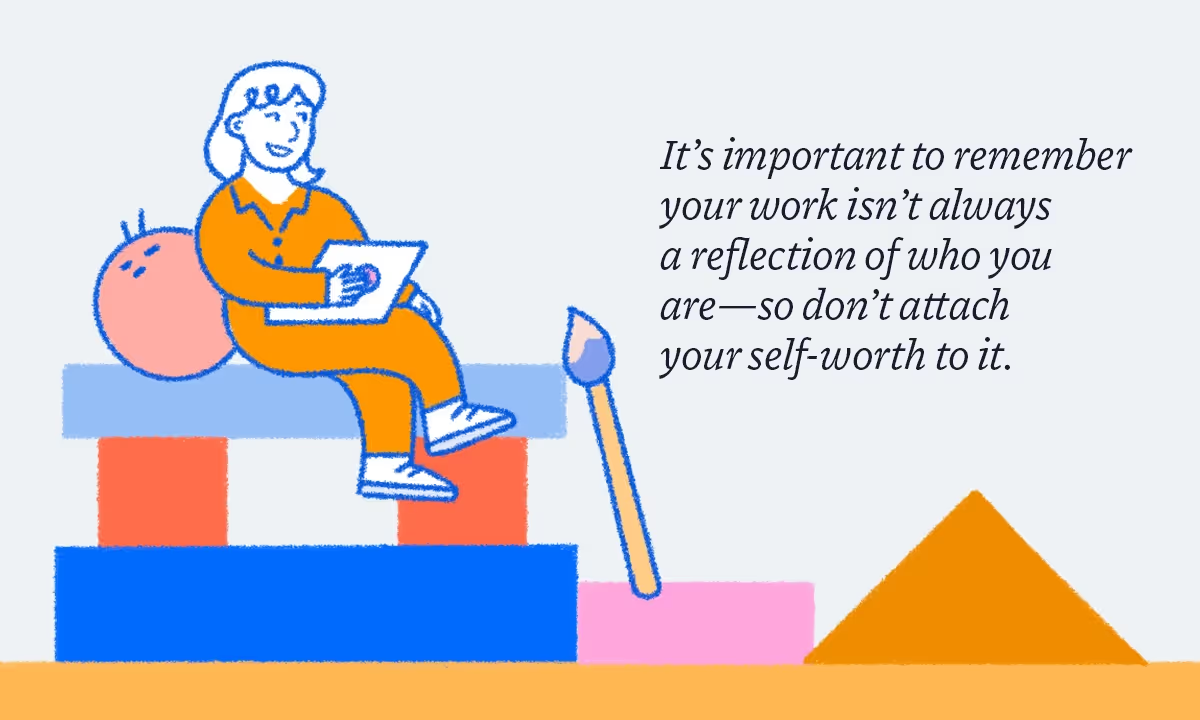
Many of us know the feeling—that deep connection to your work that can make feedback, constructive or not, feel like a personal hit. Mia, a designer herself, offers a word of caution against falling into that mindset.
Hit the Pause Button: Blocks often appear when you’re highly stressed and anxious, meaning your mind is too exhausted to conjure brilliance. Mia swears by plugging into hobbies that reset her creative energy. For her, that means immersing in “movies and 2D animated films with really good stories” (she loves the hand-drawn, organic feel), letting music take over at concerts or local gigs, or finding the “almost therapeutic” rhythm of kneading dough while baking. She laughs that it’s like slime toys—but edible. And here’s a fun secret: she’s been learning bass guitar on the low. “I’m not that good at it,” she admits, “but it’s fun.” For Mia, hobbies don’t need to be perfect—they just need to free your mind from the grind.

Just Start: But what if you don’t have the luxury of downtime? “Just start creating anyway,” Mia says. Even if inspiration feels miles away, momentum begins with the smallest step. She believes that getting words, sketches, or designs out—no matter how rough—loosens up the block. “Sometimes you just need to start somewhere—it doesn’t have to be perfect,” she explains. And if all else fails, deadlines can act as an unlikely ally. “Having people waiting on you is a good motivator,” she adds. For Mia, progress doesn’t come from waiting for the spark but from making it yourself.
Beyond breaks and deadlines, Mia emphasizes something deeper: keeping a healthy distance from what you create. “There’s this tendency for [us] creatives to really attach yourself to your work because it’s like an extension of you,” she says. But she’s learned not to tie her self-worth to feedback or outcomes. “You won’t always be working on projects that you like… and sometimes you might even get a lot of negative feedback on something you worked hard on.”
When that happens, she reminds herself: “Your output isn’t always a reflection of who you are. You just go back to the brief, check if you’re meeting its objectives, and remember—there’s no shame in asking for help. That’s why you’re part of a team.”
Next-Gen Leadership
Unlike more traditional firms, Cocomilk isn't powered by stale coffee and spreadsheets; it’s fueled by the chaotic, brilliant energy of younger millennials and Gen Z talent—a factor Mia considers the ultimate core strength. Forget waiting three months for a trend report; her team is the trend report, bringing an endless scroll of fresh, fun ideas and knowing exactly which viral sound bite or pop culture reference to use.
With your employees being predominantly younger millennials and Gen-Z, what leadership style have you developed for the team? What do you feel are the benefits of having such a youth-populated company?
They’re very quick to learn new programs, and they’re up-to-date with technology. They’re flexible and adaptable. They’re open to trying out new things as long as it goes through an equitable process.
Mia’s role, then, isn’t to be a micromanager; it’s to be the cool, solutions-oriented captain who never flinches. Her commandments are simple and we begin with Stay Cool (because panicking only makes the deadline storm worse). Mia maintains composure because staying calm provides essential clarity for the next steps. The second non-negotiable is to Listen First. Avoid assumptions. She emphasizes the necessity of trying to “get in their shoes” to understand why a problem exists before offering a solution. She learned early that genuine empathy means understanding why a problem exists before whipping out a generic solution.
As Cocomilk grows, the biggest challenge wasn’t managing the team; it was changing herself. Her old workflow—quick DMs and loop-in-one-person decisions—was quietly creating friction.
How about you? How did your team change or even develop its own habits?
I think especially when our team grew,I actually like going on calls for discussions. Before, I was used to merely relaying my thoughts through chat...or when there were fewer people on the team, I didn’t find the need to loop in too many people before making a decision.
This new reliance on live conversations, even virtual ones, is driven by a need for clarity and connection. Mia finds that talking things through allows her to “explain your thoughts clearer” while also reducing the primary stressor of digital communication: misinterpretation. “There’s also less room to misinterpret your tone, [because] I would say there’s a huge difference in how you type versus how you talk in person.”
This commitment to dialogue has been “helpful in resolving issues or finding solutions to problems” and simply “makes things easier talaga” (truly easier). Beyond tone, she’s adopted the habit of broader inclusion: “Before, I just go to one person versus now, talaga, I loop in a group or whoever is involved in that particular project. I also get to hear different ideas and perspectives on how to tackle the situation.”
Hot Takes Anyone?
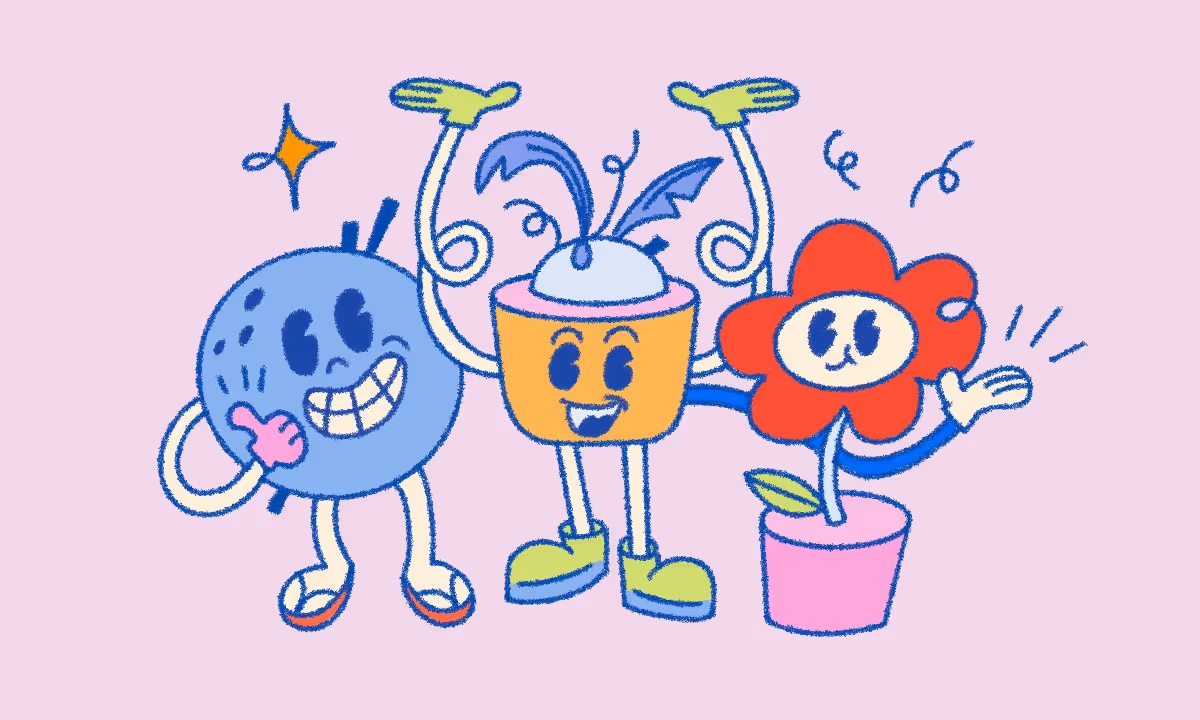
Mia will die on two hills: Rubber Hose animation and Corporate Memphis illustration—two of the design world’s most eye-roll-inducing trends. But her defense isn’t nostalgic; it’s technical.
“I don’t think the whole concept of these retro style cartoons is bad, but the problem sometimes exists in the execution and application. I think it still has its charm, as long as it’s used for its intended purpose and isn’t just slapped onto a brand because it’s a trend. Maybe I’m just personally attached to that ‘cause I grew up watching cartoons like that, but I don’t think there’s anything bad about it, per se.”
What she’s really arguing for isn’t the trends themselves, but design literacy.She highlights how design, particularly when it becomes a trendy aesthetic like Rubber Hose, isn’t some magic spell to simply weave around a brand to make it work. Instead, the widespread failure and oversaturation of these trends reveal a deeper truth: design takes technical care, precise application, and genuine intention.
“I find the style itself charming and fun.”
And for the most polarizing trend, the geometric illustration style commonly referred to as Corporate Memphis, Mia says she’s got no complaints. Her defense is rooted entirely in its efficiency and practicality. She argues that it’s a highly flexible way to design characters and build an efficient design system for quick iteration.
“They’re not bad, but they should be done correctly."
Under Mia Lagos’ co-leadership, Cocomilk has grown into a pioneer of resilient, high-performing creative culture where empathy isn’t a “soft skill,” but a serious strategy. She champions a work philosophy that prioritizes solutions over suffering, proving that kindness and clarity can drive just as much productivity as any process or platform. By tapping into the adaptability of a young, energized team and leading by example when it comes to communication and collaboration, Mia shows how psychological safety fuels efficiency—not the other way around.
What truly sets Cocomilk apart is how it’s turned past challenges into present-day strengths, building an ethical, human-centered studio model that raises the bar for the entire creative industry.
Mia Lagos is one of the active founders of Cocomilk. Want to learn more incredible insights from our founders? Read interviews with Jan and Renee to discover their take on cultivating impactful ideas and their thoughts on what it takes to make truly good design.