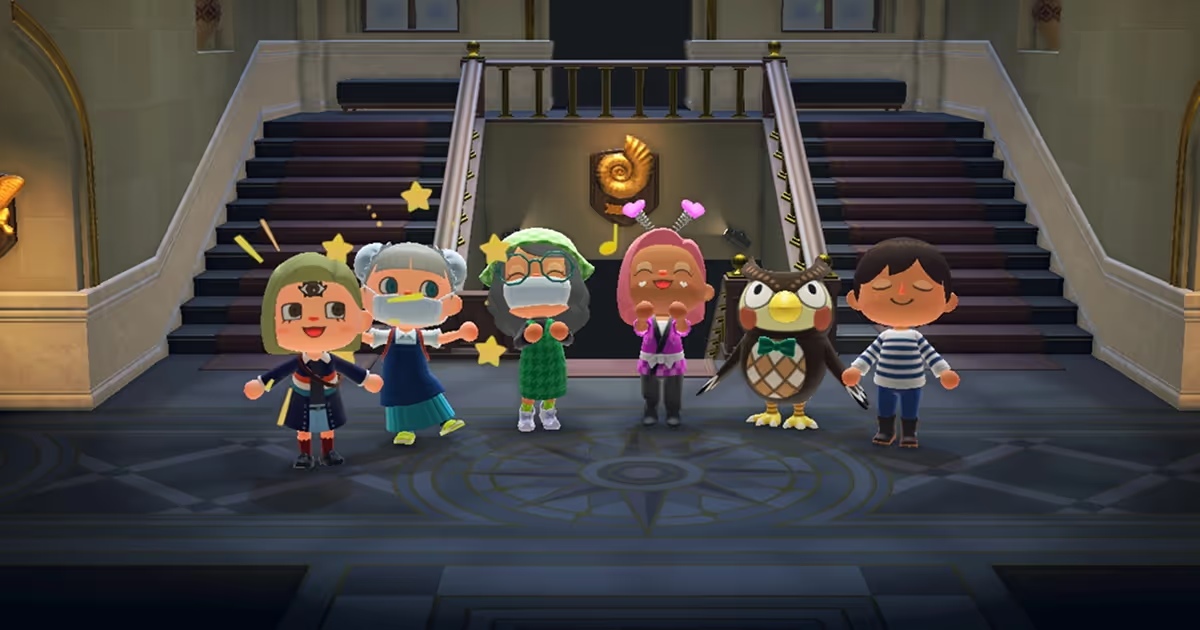
CocoChat x CDAP: Designing the Future with Roxy Navarro
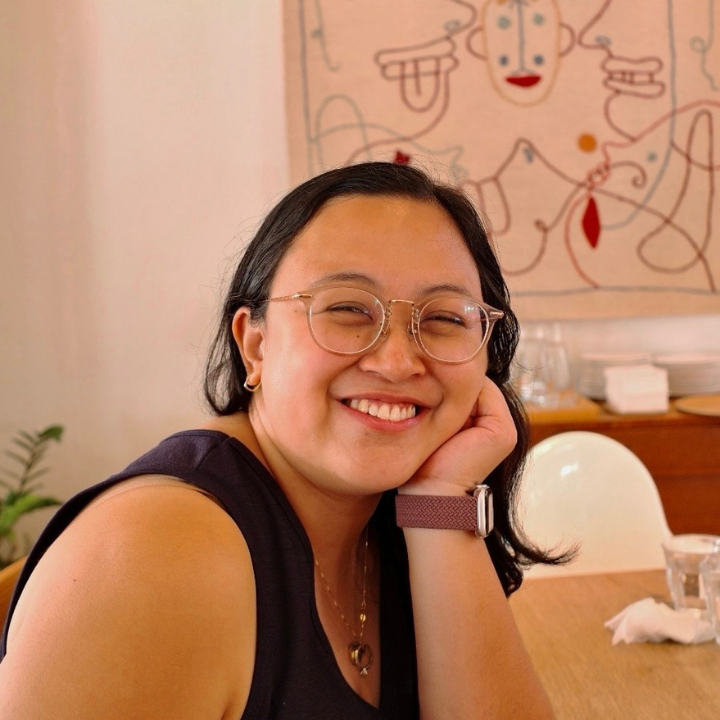
Design, in its barest form, is about bringing forth what isn't yet present, and in this realm of thinking, we, as creatives, can push the envelope of how creative work can drive social change. This is a truth Roxy Navarro, founder of Dapat Studioand Board Member of the Communication Design Association of the Philippines (CDAP), opened our eyes to during our CocoChat—among many things we discussed in our interview.
Designing with a Developer’s Mindset
Born into a family of creatives, Roxy always had a passion for the arts. Even while pursuing a Computer Science scholarship in college, she kept her creative roots watered by designing for personal projects and student organizations. During this time, Dapat Studio (formerly Works of Heart) came to fruition, becoming her first job before she even entered the corporate workforce.
But the decision to go down a social-impact-driven path was never a singular, eureka-type moment. For Roxy, it had always been on her mind.
“In college, I was anxious about so many things. I wanted to do something important. I wanted to make a difference. I wanted to make sure I used my skills. I was exposed to so many organizations that were doing so much [and I thought there was] so much that needed to be done. My thought then was, ‘How can I respond to that? I can't just stand still.’ I was thinking about [how design can help] there, and, if design is about problem solving and interventions, why can't I use that for important causes or advocacies?”
While she wanted to pour every ounce of energy into the studio after graduation, the corporate world offered lessons she couldn't ignore. And though the friction of being spread too thin between her passion and her job was undeniable, it sparked a surprising revelation—the two paths weren't at odds. The logic and structure she absorbed in her IT day job didn't stifle her creativity; instead, it anchored it, giving her the framework to thrive as a multidisciplinary creative.
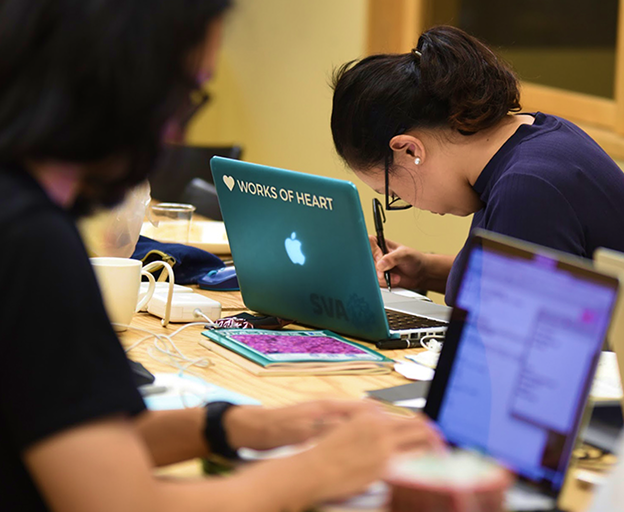
This background later helped her manage her studio’s burnout during its foundational years. Drawing on Agile and Scrum frameworks, Roxy created a tailored time-management system for her team. By carefully balancing bandwidth, capacity, and personal well-being, she created a vital safeguard for her designers—especially when tackling heavy, complex topics that can easily take an emotional toll.
Dapat Studio: How It Evolved and Where It’s Going
Reaching their ten-year mark ushered in what Roxy described as the prime years of Big Thoughts and Big Questions. The team realized Works of Heart needed to evolve, as a glaring mismatch existed between how the studio was perceived and the heavy, impactful work they were doing. “We always knew in some way that the brand was too soft and the work at hand was too tough,” Roxy recalled. “People sometimes [thought we were a] foundation or an NGO. We did so much work actually to convince [ourselves] to do the rebrand. We did surveys. We did a brand assessment. And I would never forget [this answer]: ‘Oh, are you like Papemelroti?’”
The breakthrough came when Creative Director Nikki Solinap voiced exactly what they had been searching for: Dapat Studio, a name that captures the courage, boldness, and grit of a mission meant to uplift Filipinos. “When we heard it, everything just clicked,” Roxy said. “It’s a rough translation of ‘how things should be,’ and it really encapsulates the kind of future we deserve.”
And the future of Dapat Studio? Roxy envisions it eventually becoming employee-owned, a move designed to nurture the creatives who built it. While that roadmap is still being written, their philosophy remains clear.
“To design for futures we deserve has always been the core. Business models may change. Our activities may change. We might explore workshops this year and something else next year—as long as we’re working towards our mission of designing for ginhawa for Filipinos, the communities we work with, and our audience.”
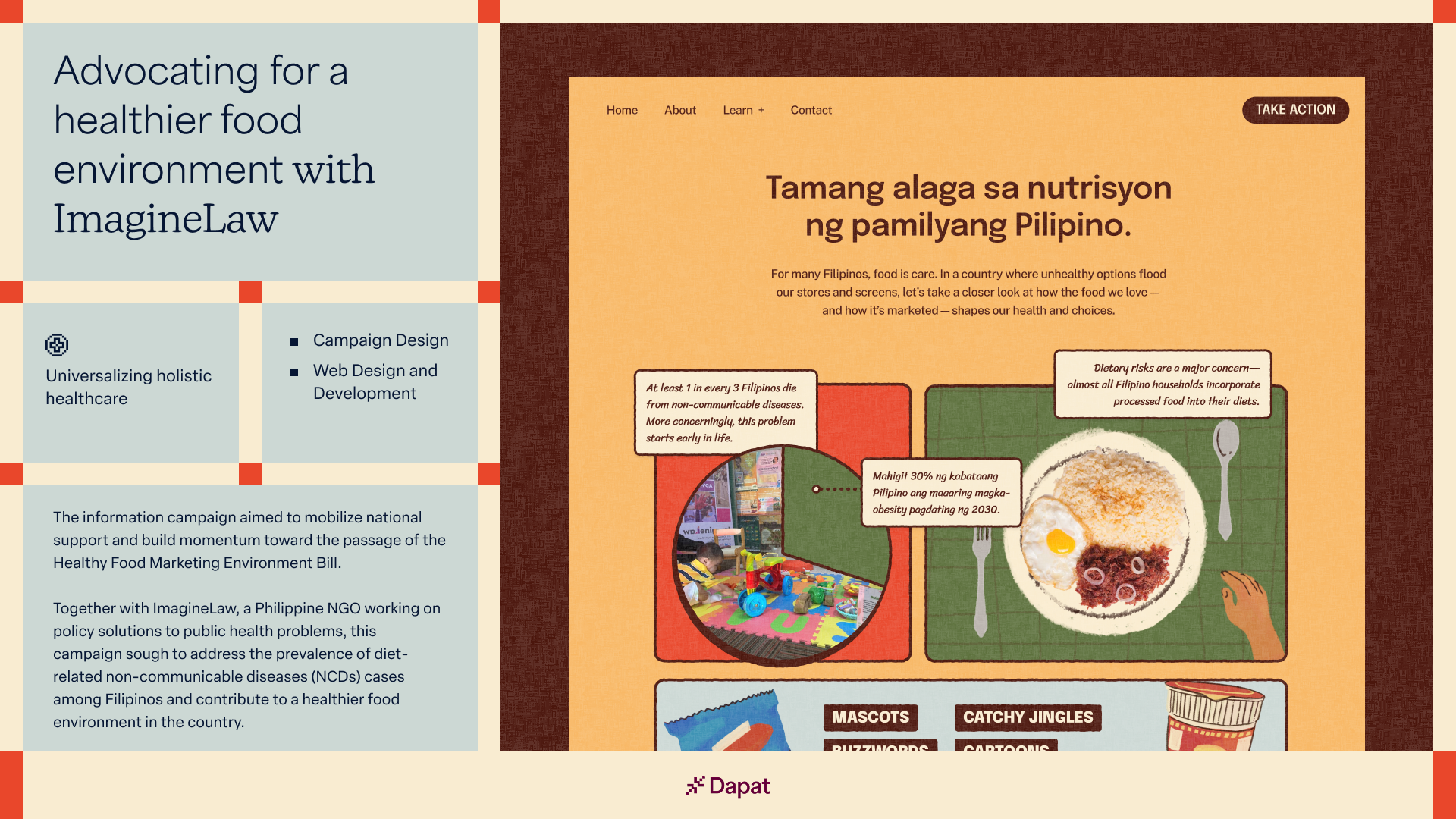
Naturally, running a social-impact design studio requires a delicate balance of integrity and sensitivity. This is especially true for complex initiatives like Dapat May Babala—a collaboration with Philippine NGO ImagineLaw to build momentum for the Healthy Food Marketing Environmental Bill. In these arenas, design is required to navigate real-world consequences where a lack of cultural nuance could alienate vulnerable communities or jeopardize crucial legislation.
For Dapat Studio, this means keeping the design process as participative as possible. While the team conducts their own rigorous discovery and research beforehand, Roxy emphasizes the need to co-design. Whenever feasible, they urge clients to bring the affected communities or organizations into the process—especially when navigating sensitive topics—to give them a direct voice in the output. When direct access isn't possible, however, Dapat leans heavily on the client’s expertise to guide them and determine the most respectful way to collaborate.
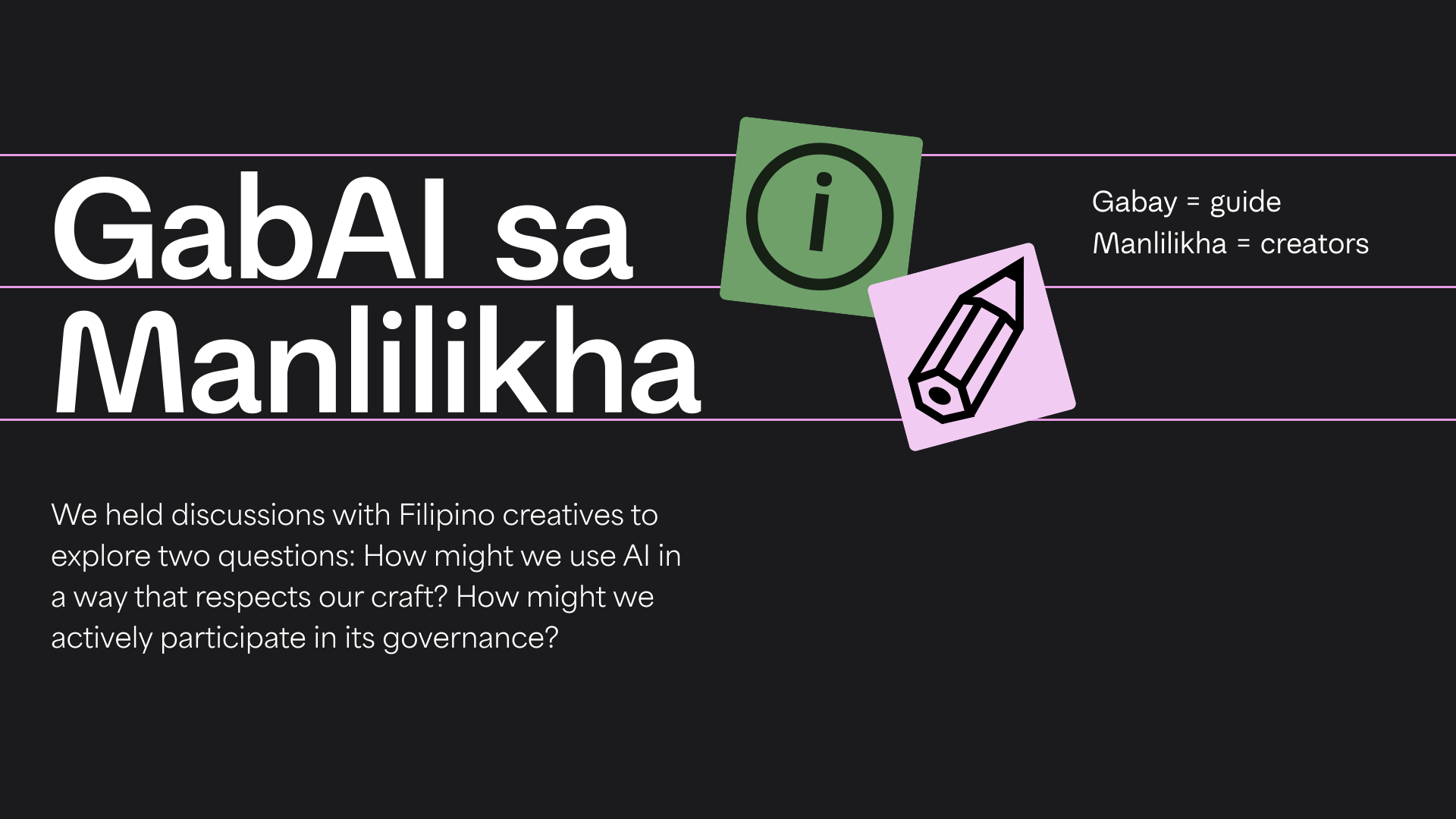
Now, Dapat faces a new kind of challenge: funding its own original initiatives. As the team looks to spearhead independent projects in human rights and health, they are pivoting toward grant funding. Though a road more difficult and unknown, it is one that has begun to bear fruit, most recently with GabAI sa Manlilikha: Community Dialogues—a project funded by the Sigla Research Center that invites the creative community to come together and collectively draft a manifesto on the rights of creatives and the ethical use of artificial intelligence.
A Just and Deserving Future
With Dapat Studio’s tagline, “designing the futures we deserve,” I wondered what this philosophy might look like through Roxy’s eyes.
“I think that it’s just [open opportunities]. It's the ability for people to make choices, for people to have an opportunity to do whatever they want. Maybe the opportunity to study, to travel safely, to commute safely, to get healthy, to provide for their family.
And, from a design standpoint, [even without the social impact lens, design is] all about building the future, right? It's about [building what’s not yet here in the present]. It's always about moving forward and improving life or ways of working. So, yeah, I think that's why I think design and social impact [are not so] far off from each other.”
With optimism, Roxy also recognizes the hard work of designers and other studios today, noting that the act itself of creation—like branding for a restaurant or designing a website—already opens pockets of opportunity for someone, not just to share their skills but to build futures.
Creating Spaces for Women to Lead
A piece on Dapat Studio’s Substack highlighted how foundational—not peripheral—women’s work is in their fields, noting that women are often the ones driving change at the center of their communities. Because Dapat Studio is women-led, I asked Roxy how she passes the torch of women's empowerment to the next generation of creatives. She harkened back to their rebranding initiative, a process where she deliberately handed the reins to her team, namely Managing Director Liezl Cabrera and Creative Director Nikki Solinap.
“I think [that’s really the best way to do it]—by creating a place where people can grow, shine, and lead. Giving them the opportunity to do it and hoping that they [pass it down too and create a cycle].”
Of course, stepping into that kind of leadership is rarely straightforward—especially for a young woman starting a business in college. Roxy admits that founding the studio came with its fair share of insecurity and uncertainty. Her biggest advice for those in the same boat? Surround yourself with the right people. “I didn't believe in myself that much. It was also so uncertain, but I had a vision, and more importantly, I had people around me who supported me, [both as cheerleaders and critics] who helped me really think things through.”
“I didn't believe in myself that much. It was also so uncertain, but I had a vision, and more importantly, I had people around me who supported me, [both as cheerleaders and critics] who helped me really think things through.”
Supporting Creatives from All Over the Philippines
When asked about the importance of being involved with creative bodies like the Communication Design Association of the Philippines (CDAP), Roxy recounts how the organization expanded her world. “I love CDAP so much. I wish I could have done more. I mean, everyone was working on a limited time, but I love that it exists, and I think it was very important for us to know each other. I think the biggest thing for me [is, that through CDAP, I was] able to get to know other studios. I got to know Dustin [Carbonera], I got to know Angel Guerrero of Adobo [Magazine], I got to know Leah [Rasay], and the work that they do. [Getting to know] them was so inspiring. Like, ‘Oh wow, ganito kadami yung designers across the Philippines—not just in Metro Manila.”
“I think the beauty of such an organization is that you get to see beyond your circle, [because while] I have designer friends, [I get to reach out to others]. Understanding, seeing, and learning from them was very important. The community that CDAP wanted to create is good—to just be able to know each other.”
But beyond rooting for creative bodies like CDAP to keep growing and expanding their knowledge-sharing initiatives, Roxy’s passion for connection and opportunity also shaped another core advocacy: spotlighting designers from the provinces. “[For a lot of creatives] in different provinces, it’s up to them to kind of promote their work,” she notes. “In reality, there’s still so much focus on Metro Manila.”
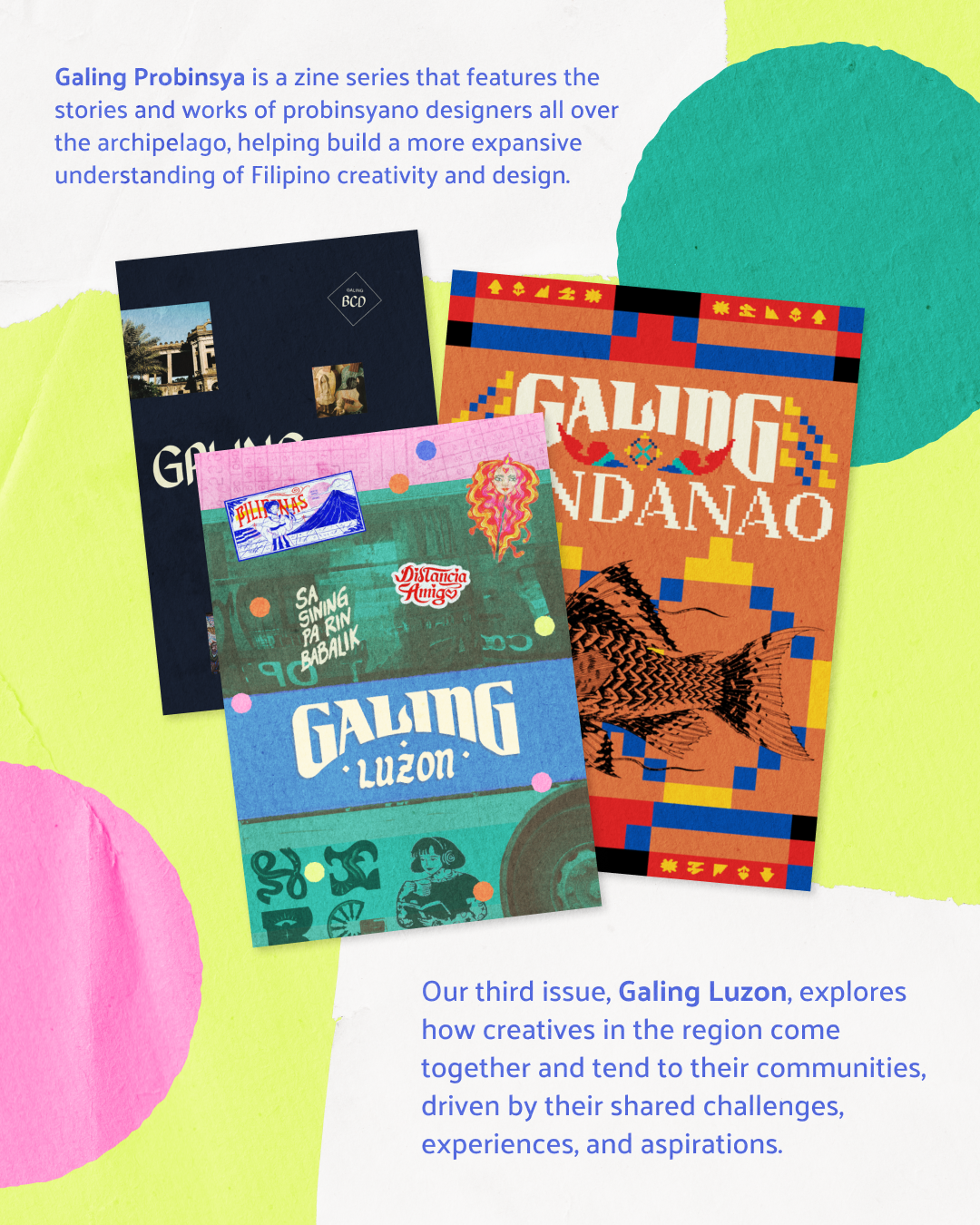
This drive to decentralize the design spotlight led to Dapat Studio’s Galing Probinsya, a zine celebrating designers from across the entire country. Originally pitched as a passion project by Nikki Solinap during the studio’s early days, the first issue started small. But no matter how humble the beginnings, once they released it to the public, stocked it in stores, and received positive feedback, they knew it was an initiative worth pursuing. Though Roxy admits that being your own client and producing self-initiated work takes a massive amount of effort, the community's enthusiastic response fueled their fire. “We knew we had to keep the vision alive and push for it.”
On Freelancing, Authenticity, and Starting Small
Looking back on her design career, Roxy says the most important thing for a new freelancer is to learn how to protect themselves.
“One is to learn how to protect yourself legally and financially. Know the numbers you deserve. Have an HMO—ganun, in all senses, protect yourself. Make this sustainable for you so that you can keep doing it.”
Beyond practical protection, she emphasizes nurturing your voice as an artist. In an age where content can easily be mass-produced, cultivating your individuality is crucial. “I think the world needs more of that now—more human, more real,” Roxy says. “We really need to tap into ourselves and our inner voices for that to happen.”
For designers looking to break into social impact work, her advice is simple: Start with what matters to you. Instead of focusing on volume or massive scale, focus on the core goal of making things better for someone—whether that is your family, your friends, or your immediate community. “Just start with that,” she says. “You don’t need to look far.”
Off the Clock
To close out our afternoon of deep dives and big questions, we ended our chat on a lighter, more personal note.
Q: If you weren’t heading a design studio today, what would you be doing?
I always ask this as an icebreaker question! In a different life or in my present life? If it’s this life, I'd want to teach full-time. In a different life, like reincarnation level, I want to be a doctor.
Q: Last question! What’s one piece of art you think about constantly and why?
One thing I really think about and like is the sculpture of Jesus Christ—the one in the church in Quezon City…UP Chapel? I think [Napoleon] Abueva made that sculpture, and it’s actually very interesting because the arms are purposely stretched. Sculptures tend to have correct anatomy, but it was stretched on purpose. I like that design because it gives me relief—the outstretched arms of Jesus Christ. Yeah, I can’t explain it. Maybe that's what art does, but it just gives me relief whenever I see that piece of art.
Looking to jumpstart your freelancing career? We’ve got a few tips and tricks up our sleeves in the CocoKit—a freelancing guide for the Filipino creative! Download your copy here.
Up next: Catch our chat with CDAP President Dustin Carbonera—coming soon. CocoChat is a short series focusing on honest conversations with fellow Filipino creatives!