Breaking Barriers: Inclusivity and Accessibility in Cocomilk

Let’s say it together: Inclusivity is not a trend. It’s the bare minimum.
Now that we’ve got that off our chest, this conversation on inclusivity and accessibility can’t be started without first defining what these are and, by extension, what makes something, someone, or someplace inclusive and accessible.
Denotatively, when something is inclusive, it incorporates everyone and is broad in scope.1 And, when something is within reach and user-friendly for people with disabilities, it is considered accessible.2 Discussions on both of these matters often come hand in hand with diversity, equity, and inclusion (DEI) because of their all-encompassing natures.
We created a brief primer of sorts to promote environments that welcome DEI and care for inclusion, as every workplace is distinct and varied in their own way. With diversity in the equation, it’ll only be a matter of time until inclusion and accessibility practices enter the picture.
Rather than splitting hairs on textbook definitions, we’re here to talk about their importance, how they manifest in the workplace, and what that means for you—because they’re more than just bells and whistles, more than fancy descriptions to tack on.
To Be Inclusive and Accessible
The concepts of inclusivity and accessibility are closely intertwined, as work environments cannot truly claim to be inclusive if they are plagued with barriers to accessibility—and vice versa.
Hallmarks of Inclusivity
Multiple journals and papers cite four spheres of workplace inclusivity:3
- Fairness in management processes, interpersonal treatment, and opportunity distribution;
- Belongingness and acceptance by the group, as well as fostering connections;
- Uniqueness in identity, enriching our distinct sense of self; and
- Diversity within the workplace where the contributions of people from different backgrounds are appreciated.
Dimensions of Accessibility
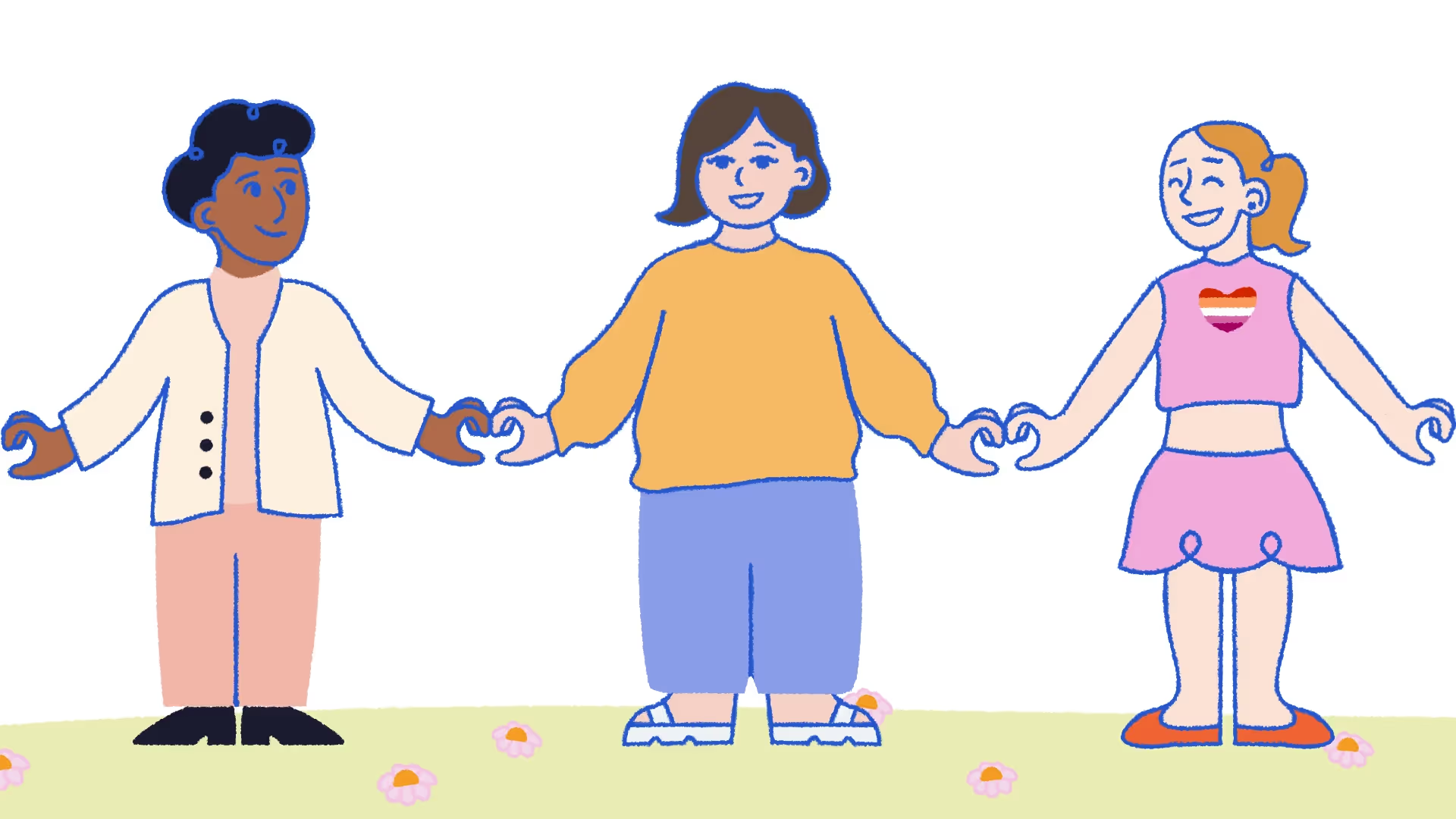
The Employer Assistance and Resource Network on Disability (EARN) highlights three distinct elements and characteristics of creating accessible work environments:4
- Physical Accessibility via ramps, elevators, ample clearances for wheelchair access in all spaces, braille, and overall support for individuals so they may accomplish their tasks;
- Digital Accessibility by providing tools, equipment, applications, and software with built-in assistive features or have the capacity to support assistive technology, eliminating any infrastructure barriers in the workplace; and
- Attitudinal Awareness through breaking down misconceptions and prejudices about people with disabilities, educating employees and engaging in discussions, and providing training to foster understanding.
Inclusivity is Always in Season
The question isn’t whether these affect you—it’s how.
Inclusion practices in the workplace don’t go unnoticed and unappreciated; studies have shown that such initiatives create an organizational culture that benefits both the company and the employees. Coworkers are more motivated to seek higher levels of innovation and have a more supportive, flexible approach to change acceptance.5
Inclusive work environments thrive because neurodivergent people bring fresh, creative approaches to problem-solving.6 We can’t stress enough just how big an advantage this is for all workplaces, but more so in creative teams. Disabled folks’ heightened awareness of exclusion strengthens the consistency, meaningfulness, and depth of the company’s inclusion practices. Additionally, collaboration with people of diverse gender identities, expressions, and sexualities opens up our minds in undoing harmful cisheteronormative mindsets. Breaking free from restrictive perspectives creates space for more thoughtful ideas and a healthier culture.
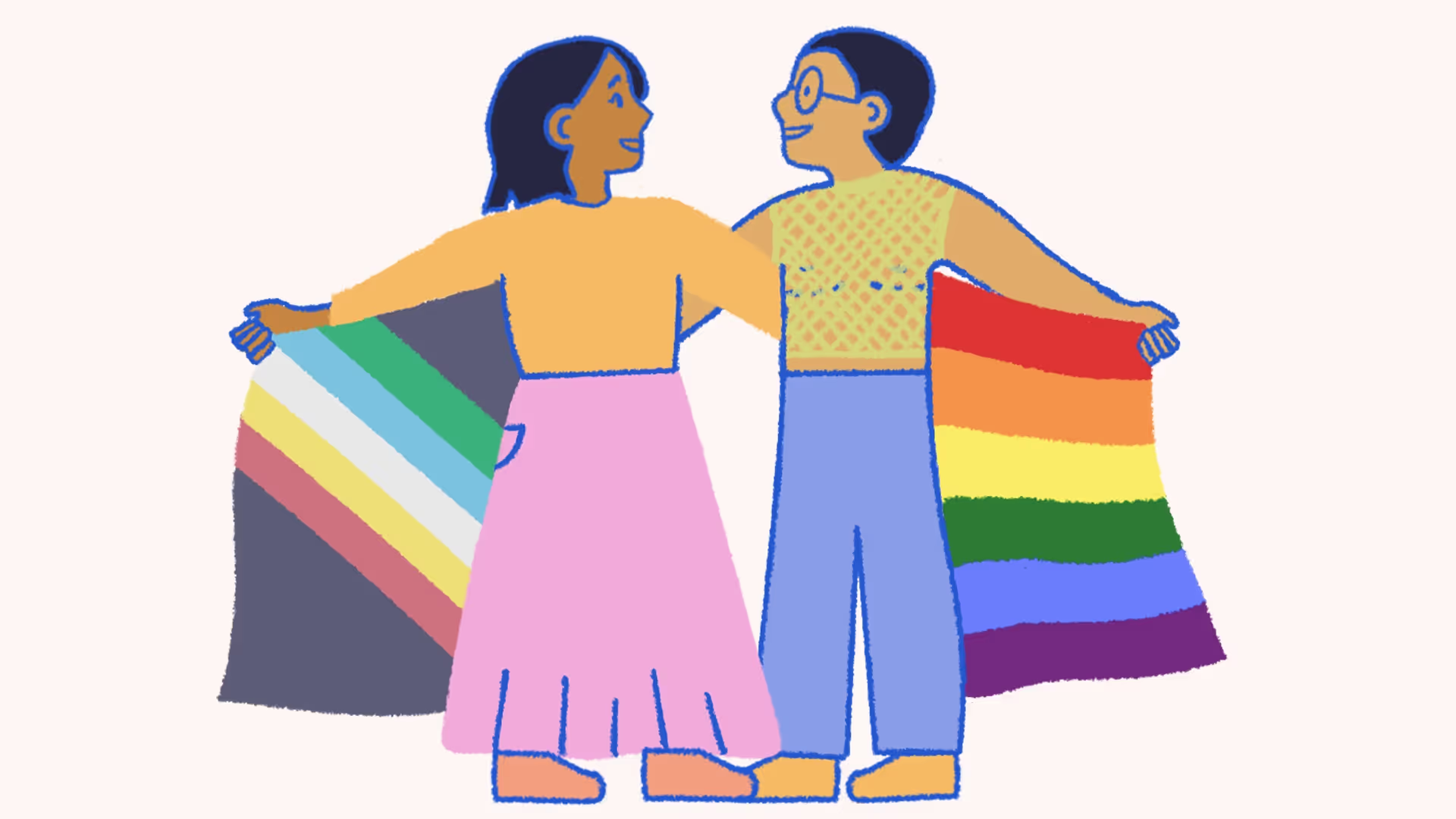
Of course, not everyone is in a position that can inspire change and improve workplace conditions. Still, if there’s one thing to take from this, it’s to keep the lines open and to keep wondering ‘How does this affect me?’ so that the conversation doesn’t trail too far behind.
Practicing What We Preach
Co-founders Jan-Daniel Belmonte, Mia Lagos, and Renee Arabia build and grow Cocomilk with their past experiences—the good and less so—in mind to be a positive force in both small and big ways.
Manifestations can vary from organization to organization, ranging from ‘Level One’ participation, such as providing company and government benefits, to offering remote-work arrangements and situating generous leave policies.
Our true secret ingredients to success, however, are the work environment we build, the company culture we cultivate, and the colleagues who uphold our values.
But we haven’t even scratched the surface. Implementing DEI policies and fostering an inclusive, accessible work culture are just a few of the ways we demonstrate our support and raise awareness.
Adaptable Working Conditions
What single thing can have a big, if not the biggest, impact on achieving work-life balance? A sound support system that not only talks the talk, but walks the walk.
Find a company culture that advocates for it through action, not lip service—because we get it. Sometimes, life just creeps in, worming its way into the little crevices and spaces we leave unattended or unoccupied for that fraction of a second. And that’s okay.
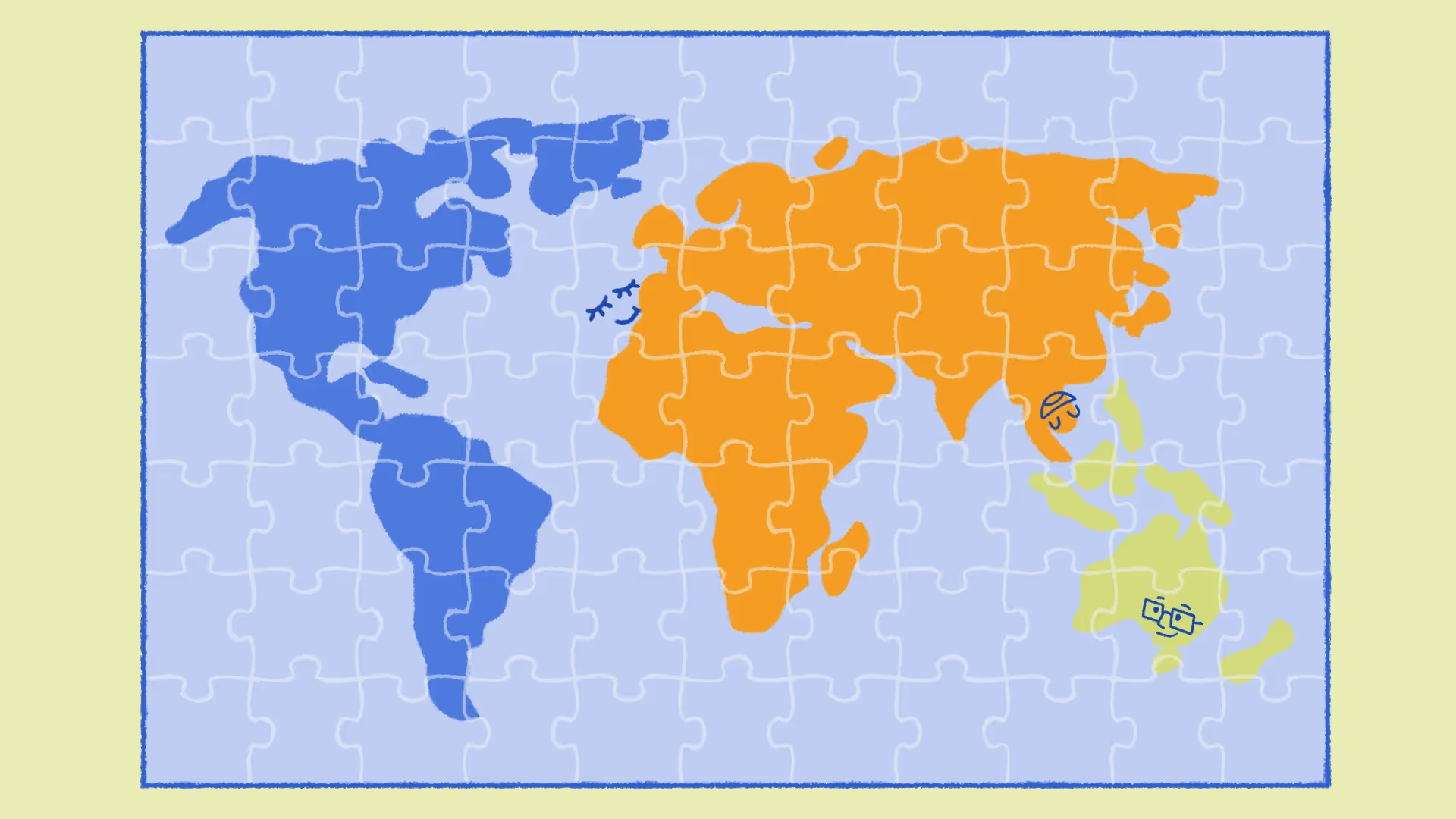
At Cocomilk, we’ve been working remotely even before the COVID-19 pandemic, and we can take multiple breaks throughout the work day to complete any chores and errands or to address any urgent matters. The only thing asked of us is transparency; i.e., to update the team as you won’t be able to reply as quickly.
It’s not just our Managing Partner, Jan, that works remotely: Many of us have worked from all over the Philippines, Asia, Europe, and more—so much so that we could fill out a ‘Places-We’ve-Worked-at-While-Traveling’ bingo card with countries and cities to spare.
Want to work at an office? No problem! For all the work-from-anywhere freedom that we enjoy, we still have our home base to come back to. Office days are totally optional, so it’s perfect for when we just want a change of pace and scenery, or for when we want face-to-face interactions with the rest of the CocoCrew.
Underscoring Individuality
You can sit with us and you can talk with us, too.
We have a zero-tolerance policy for discrimination and harassment here.
Inclusion doesn’t stop at just being part of a group. It encompasses being in a safe environment that allows you to hone your skills, thrive, learn, and explore, all while being in your element. Also, we love it when people feel safe to stim!
While we respect privacy and disclosure is one’s choice, we feel honored when people feel safe to open up about being autistic, bisexual, trans, bipolar, disabled, and so forth. So, while we’re happy to uphold an inclusive and accessible workplace, it's our coworkers from diverse backgrounds who contribute significantly to this accepting and supportive culture.

Equal Opportunities
Being resolute advocates of equality—alongside the other facets of DEI—comes naturally to our women-owned, multidisciplinary company. It’s the environment for a thriving, eclectic crew of creatives.
At Cocomilk, you can be hired and promoted regardless of race, religion, disability status, sexual orientation, gender identity, or expression—to name a few. We staunchly believe and adhere to equal employment opportunities and firmly oppose discrimination and harassment.
And when we say “opportunities,” (plural) we mean all layers of employment from hiring and promotion, to training and compensation. (So, for any CocoCrew aspirants out there, you can rest assured that applications will be reviewed fairly.)
Mental Health Awareness (It’s the Little Things)
Will the old adage ‘show, don’t tell’ ever cease to be relevant?
Even the simple understanding that each individual has different circumstances is deeply ingrained in our company culture. This quiet acknowledgement that we all have our own obligations beyond our jobs makes work much more accessible and inclusive. It creates a workplace rooted in empathy and provides a stable foundation to build upon.
Anyone can make a policy, but it’s the follow-through that counts.
It’s the gestures, both big and small, that are the most telling signs of how you know they’re in it for the long haul. It’s in the compassion and understanding with which they approach situations and circumstances. It’s in the redistribution of the load when someone has a flare-up. It’s in the availability of mental-health allowances when one is in need. It’s in the bereavement leaves that include not just your immediate relatives, but also your found families—those you’ve chosen despite not being related by blood. (Yes, pets included.)
Certainly, the idea of inclusive, accessible environments or cultures is modern—it was only in recent times that a semblance of a “framework” was created. Companies adapted, but the more conservative and traditional workplaces meet these with hesitation, doubt, or unease.
Starting and holding these conversations are vital to the discourse on physical and mental well-being.
Talk. Speak up.
Because voices travel and words carry weight.
And the next time you have the floor in an interview, skip asking whether the workplace is inclusive and accessible—ask them how.
Citations
- “Inclusive,” Merriam-Webster.com Dictionary, accessed September 18, 2025, https://www.merriam-webster.com/dictionary/inclusive.
- “Accessible,” Merriam-Webster.com Dictionary, accessed September 29, 2025, https://www.merriam-webster.com/dictionary/accessible.
- Chaudhry, Paquibut, and Tunio, “Do Workforce Diversity, Inclusion Practices, & Organizational Characteristics Contribute to Organizational Innovation? Evidence From the U.A.E”; Garrick, Johnson, and Arendt, “Breaking Barriers: Strategies for Fostering Inclusivity in the Workplace;” Shore, Cleveland, and Sanchez, “Inclusive Workplaces: A Review and Model.”
- EARN, “Creating an Accessible and Welcoming Workplace”; EARN, “Ensuring Accessibility in the Recruitment Process”; EARN, “Physical Accessibility”; EARN, “Technological Accessibility.”
- Chaudhry, Paquibut, and Tunio, “Do Workforce Diversity, Inclusion Practices, & Organizational Characteristics Contribute to Organizational Innovation? Evidence From the U.A.E.”
- Blair, “Research Shows Neurodivergent Individuals Excel Creatively.”